How to Remove Chlorine From Water for Flowers
@bloomjournal44
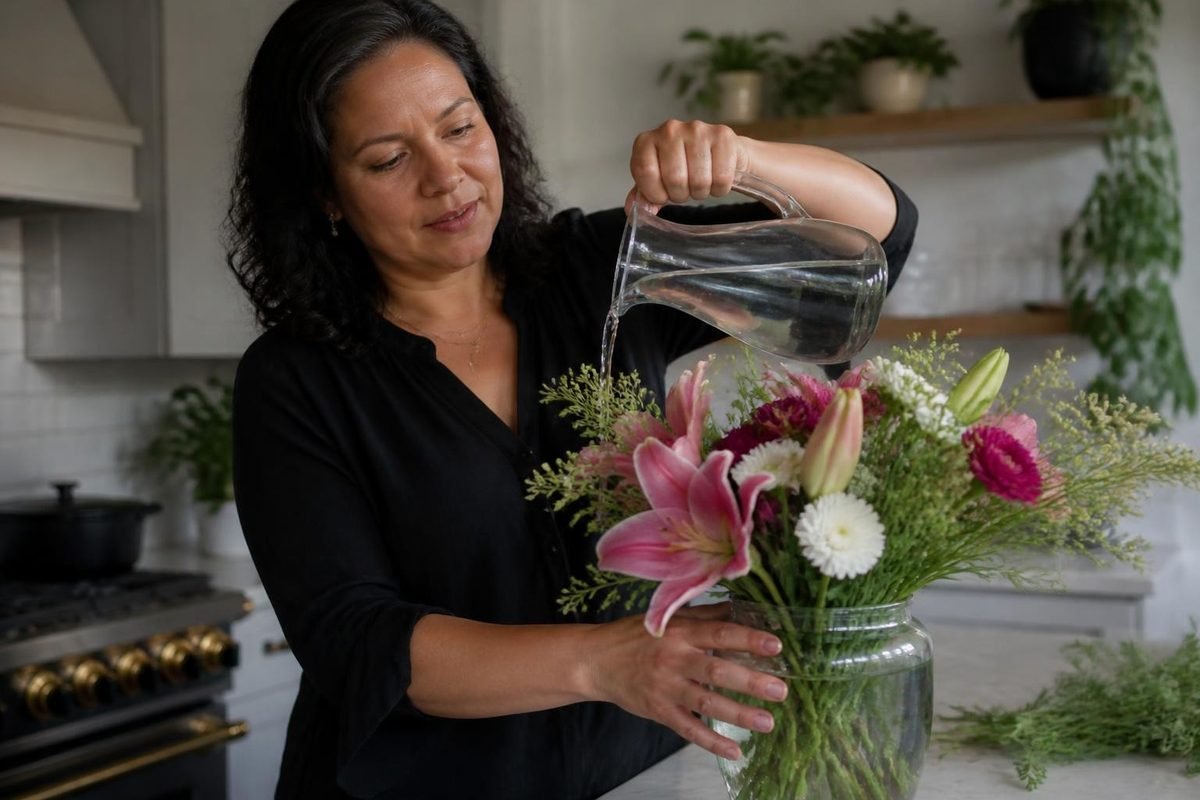
You can remove chlorine from water for flowers by letting it stand in an open container or by using a suitable water treatment. If your tap water contains chloramine instead, use a treatment that removes chloramine or choose distilled water.
First, check your tap water
Water suppliers may use chlorine or chloramine to disinfect drinking water. The difference matters because chloramine is more stable and does not disappear readily when water is left standing.
Check your water supplier's water quality report or ask which disinfectant it uses. If you cannot find out, distilled water is a straightforward choice for a vase.
You may not need to remove the disinfectant at all. Tap water is commonly used for cut flowers, and good vase care is often the more important concern. If your flowers seem to wilt quickly, check the stems and vase before assuming the water is the cause.
Let chlorine dissipate
If your water is treated with chlorine, fill a clean, open container and leave it at room temperature for a day before using it. This gives chlorine time to escape into the air, although the amount left will depend on the water and conditions.
Keep the container somewhere clean and out of reach of pets. You can cover it loosely to keep dust out, but do not seal it tightly. Pour the water into a clean vase when you are ready to arrange the flowers.
This method is not reliable for chloramine. If you need to remove chloramine, leaving the water out is not enough.
Choose another way to treat water
Several options can help if you prefer not to leave water standing or if your supply contains chloramine.
- Use distilled water for a simple option that needs no preparation.
- Use a water treatment labeled for the disinfectant in your tap water, following its directions and checking that it is suitable for the intended use.
- Use a filter certified to reduce chlorine or chloramine, as appropriate, and maintain it according to the manufacturer's instructions.
Check the label carefully. A product that removes chlorine does not necessarily remove chloramine, and a filter's performance depends on the model and its condition.
Keep the vase and stems clean
Once the water is ready, wash the vase with soap and rinse it well. Trim a little from the bottom of each stem with clean, sharp scissors or shears. Remove any leaves that would sit below the waterline.
Change the water regularly and rinse the vase before refilling it. If you have flower food, use it according to the packet directions. Keep the arrangement away from direct sun and heat to help the flowers last longer.
Questions about flower water
Does boiling remove chloramine?
Boiling can reduce chloramine, but it is not a convenient or easily controlled method for preparing vase water. A suitable treatment or distilled water is simpler.
Can I use bottled water?
Distilled bottled water is an option. Other bottled waters vary in their mineral content and treatment, so check the label if you are unsure what is in them.
Should I remove chlorine every time?
Not necessarily. Many cut flowers do well in tap water. A clean vase, fresh water and trimmed stems are sensible places to start.
Read next: seasonal flowers guide